Separate phone number for wealthy dating: privacy tips

Lesezeit: 13 Minuten
I handed over my real mobile number on a wealthy dating app exactly once. Within 48 hours, a man I'd politely declined after one coffee in Knightsbridge started calling me at 2am, leaving voicemails about how I'd 'wasted his time'. That was the moment I learned why dating privacy UK matters more than convenience, especially when meeting affluent strangers. Your real contact details are a direct line to your identity, your employer, your home address, and in the wrong hands, they become leverage you never intended to give.
The Office for National Statistics reported that 7.5 million people in England and Wales experienced stalking between April 2022 and March 2023, with digital harassment accelerating year on year. When you're visible on platforms frequented by high net worth individuals, the risk escalates. Wealthy partners often have resources to trace a phone number back to a full profile, sometimes within minutes. I've seen people's LinkedIn, Facebook, home postcode, and workplace discovered from a single mobile number. This isn't paranoia, it's the reality of data brokerage and reverse lookup tools in 2025.
Why a separate phone number protects you beyond blocking
Blocking a caller on your personal number stops calls, but it doesn't erase the number from their phone or prevent them sharing it. I learned this when a date I'd blocked in London passed my number to a friend who then messaged me months later. The connection remained in their contacts, and I had no control over where that information travelled next.
A separate phone number for dating means you control the entire lifecycle. When trust breaks down or someone crosses a boundary, you can disable that number without changing your primary contact details. Your employer, family, bank, and GP surgery all stay reachable on your real number while the dating channel simply closes. This isn't duplicity, it's compartmentalisation, and it's standard practice in any scenario where you meet strangers online.
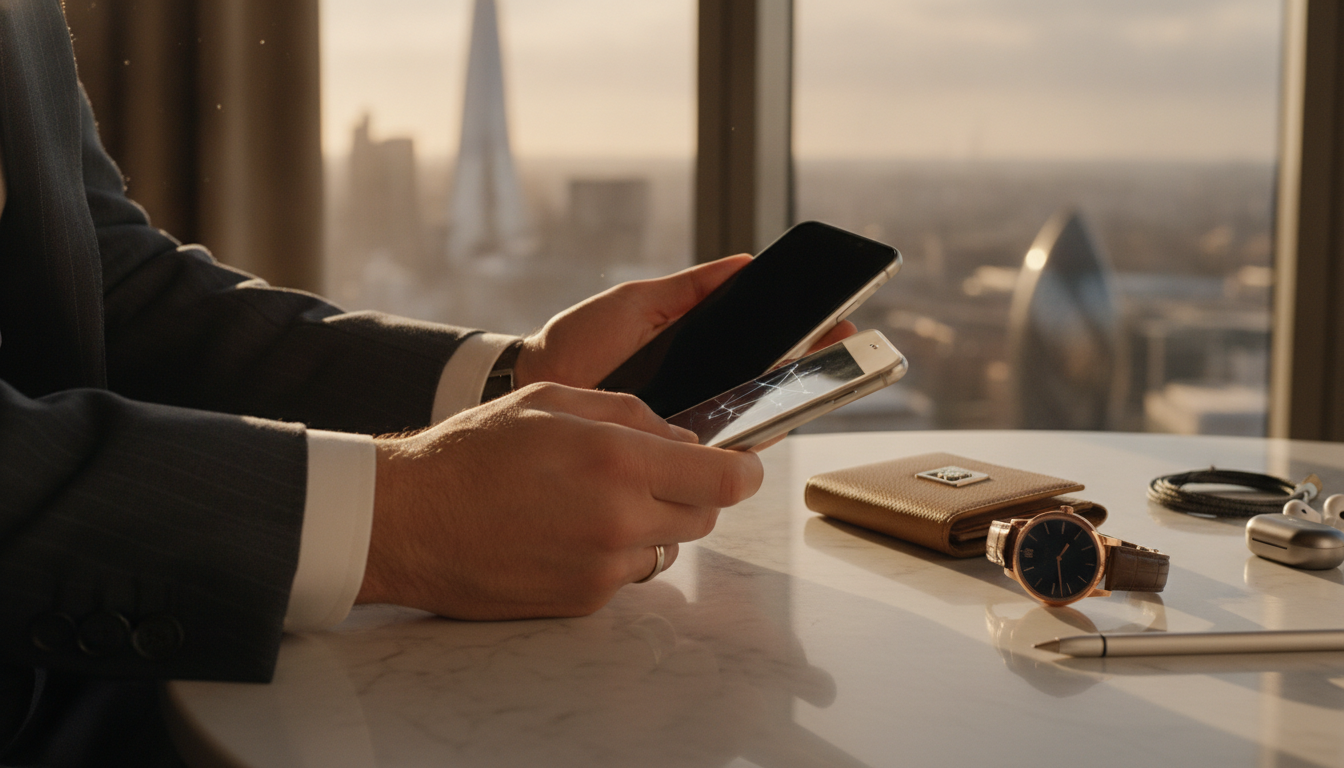
I use a virtual number through an app called Hushed, which costs £4.99 monthly for a UK number with unlimited texts and 200 minutes of calls. It routes through my existing smartphone without needing a second SIM card, and I can delete the number and purchase a new one whenever I want. Other popular services include Burner (£3.99 monthly) and Google Voice, though Google Voice isn't officially available in the UK without workarounds involving VPNs, which I avoid for reliability.
Email aliases: the overlooked layer of dating privacy UK
Most people protect their phone number but happily hand over their primary Gmail address, not realising it's often linked to Google Photos, YouTube comments, public business reviews, and old forum posts. I once Googled a date's email before meeting him in Edinburgh, and his entire Amazon wish list appeared in the results because he'd shared it publicly years earlier. He'd forgotten, but the internet hadn't.
Creating an email alias specifically for dating takes 90 seconds. I use ProtonMail's free tier, which allows one alias with end-to-end encryption and no phone number required to sign up. My dating alias is something neutral, like firstname.initials.2024@protonmail.com, professional enough for booking tables at The Ivy but entirely disconnected from my work inbox or personal accounts.
Apple's Hide My Email feature, included with iCloud Plus for £0.99 monthly, generates random addresses that forward to your real inbox. Each address can be deleted independently, so if someone starts spamming you after a date goes sideways, you kill that alias without affecting anything else. This is particularly useful when a match asks for your email before you've met in person, a request I now treat as standard on platforms like MySugardaddy where members prefer to move off-app quickly.
What to avoid: free email services with weak privacy
Free Gmail, Outlook, or Yahoo addresses are fine for general use, but they require a recovery phone number or secondary email, creating chains of data that link back to your identity. If you're serious about anonymous contact methods, choose a provider that doesn't mandate these recovery options. Tutanota and ProtonMail both meet this standard, with servers based in Germany and Switzerland respectively, subject to stricter data protection laws than US-based providers.
A 2023 report from the UK Information Commissioner's Office noted that 42% of data breaches involved email accounts, often because users reused passwords across multiple services. If your dating email shares a password with your banking login, a single breach exposes both. I use a password manager, Bitwarden's free version, to generate unique 16-character passwords for every dating alias I create.
When to reveal your real contact details
There's no universal timeline, but I follow a three-date rule with one exception. If we've met in person three times over at least two weeks, in public places like the restaurants near Covent Garden or a walk along the South Bank, and conversation has moved beyond surface-level small talk, I'll consider sharing my real number. The two-week minimum matters because initial charm often fades once someone realises you won't be rushed into intimacy or financial dependency.
The exception is safety-critical scenarios. If you're travelling to meet someone in a city you don't know well, give a trusted friend your real number, your date's full name, and the exact location. I did this before meeting someone in Manchester for the first time, texting my sister the restaurant name, Hawksmoor Manchester on Deansgate, the date's LinkedIn profile, and an agreed check-in time. My burner number stayed with the date, but my sister had the real details if something went wrong.
I've also shared my real number earlier when meeting someone through a vetted introduction, like a member event at a private club where attendees are background-checked. Screening reduces risk, though it doesn't eliminate it, so I still verify independently before making the switch. Spotting fake millionaire profiles early is a skill that protects your privacy as much as your wallet.
Setting boundaries around contact frequency and channels
A separate number is only effective if you establish rules around its use. I tell new matches that I don't answer calls before 9am or after 9pm, and I don't respond to unsolicited photo requests. This isn't prudishness, it's filtering for respect. Someone who can't honour a simple boundary about texting times will struggle with larger boundaries later, like financial independence or the pace of physical intimacy.
One date in Chelsea tested this within hours of exchanging numbers, sending a string of messages at 11pm asking why I wasn't replying. I didn't justify or explain, I just stopped responding entirely. He'd shown me who he was, and I believed him. The separate number meant I could disengage without worrying he'd escalate to my work phone or personal accounts.
I also keep dating apps installed on my phone even after exchanging numbers, because platform-based messaging creates a record that's harder to manipulate. If someone later claims I said something I didn't, the chat history on MySugardaddy or another site provides proof. Once I delete the app or the conversation, that safeguard disappears.
How to handle requests for voice or video calls before meeting
Voice and video calls on your burner number are low-risk ways to verify someone's identity before committing to a date. I suggest a 15-minute WhatsApp video call using the virtual number, scheduled in advance so both parties can prepare. This filters out people using stolen photos, confirms they can hold a conversation in real time, and gives you a sense of their energy beyond carefully edited text messages.
If someone refuses or makes excuses, that's useful information. Legitimate, confident people don't dodge a brief video call, especially when meeting strangers from the internet. The few who've declined in my experience either misrepresented their age, appearance, or availability, none of which I'd have discovered until wasting an evening in Mayfair or Shoreditch.
Managing multiple aliases without losing track
The administrative burden of burner phones and email aliases is real. I've accidentally replied to a date from the wrong email address, briefly confusing them until I clarified. To avoid this, I keep a simple spreadsheet in a password-protected file, listing each dating profile, the associated phone number, the email alias, and the platform. When someone messages, I check the sheet before replying, ensuring consistency.
This sounds tedious, but it takes 10 seconds per interaction and has saved me from blending conversations or revealing my real contact details by mistake. If you're active on multiple platforms simultaneously, juggling millionaire dating apps alongside traditional sites, the risk of cross-contamination increases without a tracking system.
I also set calendar reminders to review and delete unused aliases every three months. Email addresses and phone numbers I'm no longer using get purged, reducing the attack surface if any service suffers a data breach. It's housekeeping, but it's effective housekeeping that keeps your digital footprint manageable.
What happens when someone asks why you're using a different number
Direct questions about privacy can feel awkward, but honesty works better than evasion. I say, "I use a separate number for online dating until I know someone well, it's a safety measure I apply to everyone." Most people understand immediately, especially those who've also experienced boundary violations online. The few who react defensively or dismissively have, without exception, later proven to be poor matches for other reasons.
One man I met through a private members' event in Mayfair pushed back, insisting that 'real connections require real numbers'. I held firm, explaining that real connections are built on respect, not premature access to personal data. He dropped it, we continued dating, and three weeks later I shared my real number once trust had developed. He later admitted he'd respected the boundary precisely because I enforced it without apology.
Occasionally someone will Google your burner number and discover it's a virtual service, then question your intentions. I frame it as standard practice in 2025, no different from using a VPN or two-factor authentication. According to a 2024 Ofcom report, 68% of UK adults now use some form of privacy tool online, whether ad blockers, encrypted messaging, or virtual numbers. You're not an outlier, you're part of a majority that values control over their digital identity.
Integrating privacy tools without appearing paranoid

There's a fine line between sensible precaution and behaviour that makes you seem unapproachable. I've found that explaining once, briefly, is enough. After that, I let my actions speak. I'm warm, engaged, and genuinely interested in getting to know someone, but I'm also not willing to compromise my safety for the sake of appearing carefree.
Using a separate phone number and email doesn't prevent intimacy, it postpones unearned access. The right person waits, asks clarifying questions if they're curious, and respects the boundary without resentment. The wrong person pressures, minimises your concerns, or frames your caution as distrust. That distinction becomes visible within days, and it's one of the most valuable filtering mechanisms I've ever applied to dating rich men or anyone else.
FAQ: Dating privacy UK and anonymous contact methods
Should I give my real phone number on dating sites before meeting in person?
No, not before at least one in-person meeting in a public place. A virtual number protects your identity, prevents unwanted contact escalating to your personal phone, and gives you full control to disable the channel if boundaries are crossed. Services like Hushed or Burner cost under £5 monthly and eliminate the risk of your real number being traced, shared, or used for harassment. I've used this approach for three years without a single instance where revealing my real number earlier would have improved the connection, but I've avoided several situations where withholding it prevented serious problems.
What is the best burner phone app for UK dating in 2025?
Hushed is the most reliable, offering UK numbers for £4.99 monthly with unlimited texts and 200 minutes of voice calls, all routed through your existing smartphone. Burner is slightly cheaper at £3.99 but limits you to fewer minutes, which can be restrictive if you prefer voice calls over text. Both apps allow you to delete and replace numbers as needed, and neither requires a second SIM card. Avoid Google Voice unless you're comfortable using a VPN, as it's not officially supported in the UK and reliability suffers without one.
How do I create an anonymous email for dating safety without linking it to my real identity?
Use ProtonMail or Tutanota, both of which allow account creation without a phone number or recovery email. Choose a username unrelated to your real name, avoid reusing passwords from other accounts, and enable two-factor authentication using an authenticator app like Authy rather than SMS. I set up a ProtonMail alias in under two minutes, and it's served as my dating email for 18 months without a single spam issue or data breach. Apple's Hide My Email feature, included with iCloud Plus for £0.99 monthly, is another strong option if you're already in the Apple ecosystem.
When is it safe to switch from a burner number to my real phone number?
After at least three in-person meetings over a minimum of two weeks, assuming the person has respected your boundaries, shown consistency in communication, and demonstrated emotional stability. I also verify their identity independently, checking LinkedIn or mutual connections, before making the switch. If you feel pressured to share your real number sooner, that pressure itself is a red flag worth examining. Trust develops through actions over time, not through a single charming evening in a Michelin-starred restaurant in London.
Can someone trace my burner phone number back to my real identity?
It's significantly harder than tracing a regular mobile number, but not impossible if someone has advanced technical skills or access to paid data broker tools. Virtual numbers from Hushed or Burner don't appear in standard reverse lookup databases, and they're not linked to your SIM card or billing address. However, if you've used the burner number to sign up for other services that required personal details, like a loyalty programme or a shopping account, those connections could theoretically be exploited. Keep your burner number strictly for dating, don't reuse it elsewhere, and you minimise this risk to near zero.
Privacy as a filter, not a barrier
The best outcome of using separate contact details isn't just avoiding harassment or identity theft, though both matter. It's that dating privacy UK forces you to slow down, observe patterns, and make deliberate choices rather than reactive ones. When I can't be rushed into intimacy by someone who has my real phone number and knows where I work, I stay in control of the timeline. That control has led to better connections, clearer communication, and far fewer regrets about people I let too close, too soon.
If you're exploring platforms like MySugardaddy or meeting affluent partners through private events, treat your contact details as a privilege you grant, not an automatic exchange. The people worth dating will respect that standard, and the ones who don't have told you everything you need to know. Protect your privacy, trust your instincts, and let boundaries be the framework for something genuine, not the obstacle to it.