Spotting fake millionaire profiles: red flags to watch

Lesezeit: 13 Minuten
Three months into chatting with "James from Knightsbridge," I noticed something off. His profile photos showed a different Patek Philippe in each shot, yet he claimed his watch collection was in storage during a house renovation. When I suggested meeting at 67 Pall Mall, a members club he'd mentioned belonging to, he suddenly had a work trip to Dubai. That was the moment I learned to spot fake millionaire profiles before wasting weeks on someone playing dress-up with Google images.
According to Action Fraud, the UK's national fraud reporting centre, romance fraud cost victims £92.7 million in 2023 alone, with the average loss per victim reaching £9,000. The upscale dating scene attracts a particular breed of scammer who studies wealth markers just well enough to fool the untrained eye. I've now vetted hundreds of profiles across platforms like MySugardaddy and learned exactly what separates genuine affluence from elaborate fiction.
Photo forensics: what wealthy profiles actually show
Real millionaire profiles rarely look like a photoshoot for Country Life magazine. I've matched with CEOs whose profile pictures showed them in North Face fleeces at a sailing regatta in Cowes, or in rumpled suits after a 14-hour day. The photos feel unstaged, often taken by someone else in natural settings, not perfectly lit studio shots.
Fake millionaire profiles lean heavily on stock photography tropes. Run a reverse image search on Google Images or TinEye for any profile that looks too polished. I caught one "hedge fund manager" using photos that appeared on at least eight other dating profiles across Europe. Genuine wealthy members don't need to borrow their visual identity.
Watch for consistency in background details. One profile I investigated showed a "Mayfair flat" with furniture visible in three different photos, but each room had completely different architectural mouldings and ceiling heights. No £3 million flat in W1 has that kind of structural chaos. Real wealth leaves a coherent trail.
The luxury prop problem
Scammers obsess over props. You'll see the same Bentley Continental GT photographed at identical angles in suspiciously perfect lighting. I once matched with someone whose "yacht in Monaco" was actually a charter vessel I recognised from a James Bond location tour. The giveaway was the name on the stern didn't match what he'd told me.
Authentic profiles show wealth more casually. A business card left on a desk in the background. A glimpse of a boarding pass to Singapore in business class. The worn leather interior of a well-used Range Rover, not a showroom shot. If every photo screams "look how rich I am," that desperation itself is the red flag.
Verification badges and what they actually mean
Not all verification is created equal. MySugardaddy offers multi-layer verification including photo checks and income confirmation, which filters out a significant percentage of fraudulent accounts. But some platforms only verify that you control an email address, which proves nothing about wealth or identity.
According to Ofcom's 2024 Online Safety Report, only 23% of UK dating platform users understand what verification badges actually check. Most assume a blue tick means someone's finances have been audited, when often it just confirms they submitted a government ID. I always ask directly what a platform's verification process involves before trusting any badge.
Look for platforms that verify income documentation or assets. Some high-end services check Companies House records, Land Registry ownership, or require a video call with identity documents. These layers matter. A scammer can fake a passport scan, but they can't fake being a listed director of a profitable Ltd company that's filed accounts for five years running.
The LinkedIn cross-check
Before investing serious time, I search their stated name and company on LinkedIn. Real executives have detailed work histories, connections to verifiable colleagues, and posts or articles demonstrating expertise. One "private equity partner" I vetted had a LinkedIn that was six weeks old with 14 connections and no company listed. That profile vanished from the dating site within three days of my questioning.
Check if their career timeline makes sense. A 34-year-old "managing director" of a £50 million firm would have a decade-long paper trail of progressively senior roles, board memberships, or mentions in trade press. Search their name with "Companies House" in Google to verify directorships. This takes four minutes and has saved me countless wasted evenings.
Conversation patterns that expose scammers
Genuine wealthy professionals talk about time scarcity more than money. They'll mention being up at 5:30 AM for a board call with New York or having to cut dinner short for a 9 PM investor update. Scammers, by contrast, have suspicious amounts of free time to chat and an obsessive focus on wealth itself as a topic.
I matched with someone who claimed to run a property development company in Surrey but couldn't name a single planning authority, didn't know about the Town and Country Planning Act, and had never heard of the NHBC warranty scheme that every UK developer navigates. Real millionaires speak the technical language of their industry fluently, not in generic rich-person clichés.
Watch for knowledge gaps about places they claim to frequent. I asked one "regular at Annabel's" what he thought of their recent refurbishment in 2023, and he described interiors that matched the old Berkeley Square location, not the current Mayfair site. A genuine member would know that the club completely redesigned when it moved.
The offshore emergency script
The classic romance scam follows a pattern documented by UK Finance in their 2024 fraud report. After building rapport for weeks, the scammer creates a financial crisis while "travelling abroad." They need £8,000 to release a shipment stuck in customs, or their cards are frozen due to suspicious activity, or they need to cover medical costs for a relative.
No genuinely wealthy person is ever trapped overseas without access to funds. They have multiple bank accounts, credit facilities, lawyers, and accountants who can wire money in hours. If someone worth £5 million asks you for £3,000, you're not talking to a millionaire. When this script begins, I block immediately and report the profile to the platform and Action Fraud at https://www.actionfraud.police.uk.
Income claims and lifestyle maths
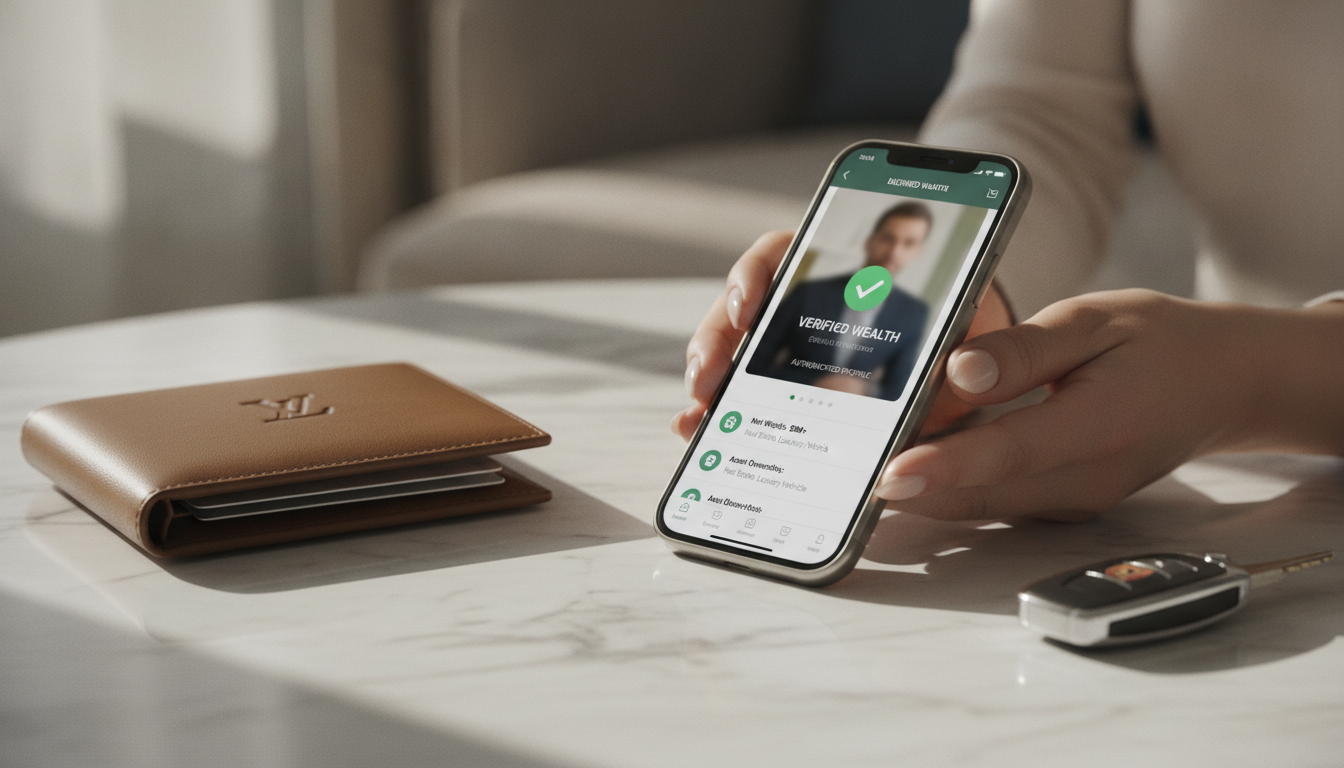
I use a simple credibility test for profiles listing specific income figures. A genuine £400,000 annual income in London translates to roughly £220,000 after tax and National Insurance. That supports a comfortable lifestyle but not Ferraris and weekly private jet flights, which some fake millionaire profiles claim simultaneously. The maths simply doesn't work.
Research typical compensation for the role they claim. A senior partner at a magic circle law firm in London earns £1.5 million to £3 million according to Legal Week's 2024 salary survey. A boutique firm partner might earn £200,000 to £600,000. If someone claims to be a "law firm partner" flying private to Monaco monthly, ask which firm. Then look up their partnership structure and verify they're listed.
Lifestyle details tell the real story. Someone genuinely earning £600,000 might have a flat in Clapham or Battersea worth £1.2 million, a seven-year-old Audi S4, and take two overseas holidays to France or Italy each year. They're not living in a Belgravia townhouse with a full-time driver. Fake profiles stack luxury signifiers without understanding what's actually achievable at various wealth levels.
Platform red flags and site credibility
I avoid platforms with no physical UK office address, no listed company registration, or websites registered less than two years ago. Scammers create disposable dating sites, harvest user data and payment details, then vanish. Check the domain registration date using a WHOIS lookup tool before creating an account.
Credible platforms have clear terms of service, transparent pricing, and contactable UK-based customer service with a phone number, not just a web form. I once reported a suspicious profile to a platform and received a detailed response within four hours explaining their investigation process. That responsiveness signals genuine fraud prevention infrastructure.
Look at how sites handle payment. Reputable services use secure payment processors like Stripe or PayPal with buyer protection. If a platform asks for bank transfers to offshore accounts or payment via cryptocurrency, that's a massive warning sign. No legitimate UK dating service operates that way.
Building your own verification routine
I've developed a standard six-point check before agreeing to meet anyone claiming significant wealth. First, Google their full name in quotes with their stated city and industry. Second, verify their LinkedIn profile matches their story. Third, check Companies House if they claim business ownership. Fourth, reverse image search all profile photos. Fifth, ask three specific technical questions about their industry or neighbourhood. Sixth, suggest meeting at a specific upscale venue they should know.
This routine takes about 20 minutes total. It's eliminated every scammer I've encountered and helped me focus energy on dating high net worth individuals who are exactly who they claim to be. The process might seem cynical, but when you're navigating platforms where people misrepresent income by six figures or more, verification isn't paranoia, it's basic due diligence.
I also recommend the video call test before any first date. Suggest a quick 10-minute FaceTime or WhatsApp video chat to "make sure we both match our photos." Real people agree immediately. Scammers suddenly have broken cameras, bad internet, or scheduling conflicts that stretch on for weeks. That hesitation tells you everything.
When to walk away
Some profiles aren't obvious scams but still waste your time with exaggerated claims. I matched with someone whose "property portfolio" turned out to be a buy-to-let flat in Reading and a half-share in a holiday cottage in Cornwall. Not quite the "extensive UK real estate holdings" his profile advertised. Technically not fraud, but definitely misleading enough to end things.
Trust your instinct when something feels performative rather than genuine. I've learned that finding millionaires on dating apps means recognising that real wealth is often understated, while fake wealth is always oversold. The genuine article doesn't need to constantly prove itself.
If someone becomes defensive when you ask verifiable questions about their background, that defensiveness is your exit cue. I once asked which terminal someone flew from at Heathrow for their "weekly New York trips," and he became hostile about being "interrogated." A real frequent flier to JFK would just say Terminal 5 without a second thought. Legitimate people don't mind reasonable verification.
Protecting yourself legally and financially
Never share financial information, even if someone's verified their profile. Your bank details, National Insurance number, or access to investment accounts are off-limits regardless of how genuine a connection feels. According to Action Fraud data from 2024, 18% of romance fraud victims shared financial credentials after being convinced the relationship was serious.
If you do become a victim of a dating scam, report it immediately to Action Fraud, your bank's fraud department, and the dating platform. Many UK banks now offer fraud reimbursement under the Contingent Reimbursement Model Code if you report suspicious transfers quickly. Document everything, including screenshots of conversations, profile details, and transaction records.
Consider using a Google Voice number or similar service for initial contact rather than your personal mobile. This creates a buffer if someone turns out to be problematic. I learned this after a suspicious match found my work email through my phone number and attempted contact through professional channels after I blocked him on the dating app.
FAQs about identifying fake millionaire profiles
What verification badges actually prove on millionaire dating sites?
Verification badges confirm different things depending on the platform. Most basic verification only checks that you control an email address or uploaded an ID photo, which proves identity but nothing about income or wealth. Higher-tier verification like MySugardaddy's income confirmation requires documentation such as tax returns, bank statements showing regular high deposits, or proof of company ownership through Companies House records. Always check a platform's verification standards in their help section. A badge means very little unless you know exactly what was verified, and even then, treat it as a starting point rather than absolute proof.
How can I verify someone's claimed net worth before meeting them?
You cannot definitively verify net worth without financial disclosure documents most people won't share before meeting. Instead, verify checkable claims. If they claim company ownership, search Companies House for their name as a director and review filed accounts. If they mention property, ask the postcode and check Rightmove sold prices to see if the area matches their claimed lifestyle. LinkedIn reveals career progression and current role. Google their name with their industry and city to find professional mentions. Cross-reference stated education with university alumni networks if they claim Oxbridge or similar. Build a picture from verifiable facts rather than asking directly about net worth, which invites more lies.
What should I do if I suspect a profile is fake after we've been talking?
Stop all communication immediately and do not send money or share financial details under any circumstances. Screenshot all conversations and profile information before blocking them, as evidence for reporting. Report the profile to the dating platform using their fraud reporting system, then file a report with Action Fraud at https://www.actionfraud.police.uk even if you haven't lost money, as your report helps police track patterns. If you shared banking details, contact your bank's fraud team straight away to secure your accounts. Check your credit report for any suspicious activity. Do not confront the scammer directly or warn them you're reporting them, as this can lead to harassment or they may simply delete evidence and move to a new victim.
Why do scammers target millionaire dating sites specifically?
Millionaire dating sites attract people specifically seeking wealthy partners, which means users expect conversations about money and luxury lifestyles that would seem suspicious on mainstream platforms. This creates cover for scammers to discuss expensive gifts, business deals, or financial topics early in conversations. Additionally, users on upscale platforms often have higher incomes themselves, making them more valuable targets. A 2024 study by the University of Portsmouth found that romance scam victims on niche wealthy dating platforms lost on average 2.3 times more than victims on general dating sites. Scammers also know that people seeking wealthy partners may be less likely to report being scammed due to embarrassment, which reduces their risk of consequences.
Are paid dating sites safer from fake profiles than free ones?
Paid sites create a small barrier to entry that filters out the most casual scammers, but determined fraudsters happily pay £40 per month if it grants access to wealthier victims. The subscription cost matters less than what verification the platform performs beyond payment. I've encountered sophisticated fake millionaire profiles on paid platforms where someone invested months building credibility before attempting fraud. Free platforms often have more fake profiles in sheer volume, but paid platforms attract higher-quality scammers running longer cons. The safest approach is choosing platforms with documented multi-layer verification that checks income or assets, not just payment method, regardless of whether they're free or paid. MySugardaddy's verification process, for instance, includes income documentation that raises the barrier significantly.
Moving forward with confidence
Learning to identify fake millionaire profiles hasn't made me cynical about upscale dating, it's made me more effective at it. I spend my time now with verified, genuine connections rather than wading through fantasy profiles. The verification skills I've developed work across all platforms and have helped friends avoid scams that could have cost them thousands of pounds.
The UK millionaire dating scene has plenty of authentic wealthy members seeking real relationships. They're just hidden among the pretenders. Your job is building the pattern recognition that separates the two. Start with the verification routine, trust your instinct when details don't align, and never compromise on basic credibility checks regardless of how charming someone seems.
Check profiles thoroughly before investing emotional energy, verify claims through multiple sources, and remember that real wealth speaks quietly while fake wealth shouts. Apply these principles consistently, and you'll navigate luxury dating platforms with the confidence that comes from knowing exactly who you're really talking to. Stay sharp, stay safe, and focus your time where it actually counts.